
Key Facts: House Extension Costs in London (2026)
An architect-designed house extension in London costs between £3,000 and £5,000+ per square metre in 2026, depending on specification and borough. For a typical single-storey rear extension of 20 to 30 m², expect a total project cost of £80,000 to £150,000 including construction, fit-out, professional fees, and VAT at 20%. London extensions cost 25 to 40% more than the national average due to higher labour rates, constrained sites, and greater planning complexity.
These figures include: construction (shell and fit-out), professional fees (architect, structural engineer, party wall surveyor), and VAT at 20%.
These figures exclude: kitchen and bathroom units and appliances (costed separately by type below), furniture, and landscaping.
| Extension Type | London Cost Per m² (excl. VAT) | Typical Total Project Cost |
|---|---|---|
| Rear (single storey) | £3,000 – £4,500 | £60,000 – £135,000 |
| Side return | £3,500 – £5,000 | £50,000 – £100,000 |
| Wraparound | £3,200 – £4,800 | £90,000 – £170,000 |
| Double storey | £2,800 – £4,200 | £120,000 – £200,000+ |
| Kitchen extension (incl. fit-out) | £3,200 – £5,000 | £70,000 – £150,000 |
Cost ranges are indicative estimates for 2026, compiled from published industry data including the RICS Building Cost Information Service (BCIS), the HomeOwners Alliance house extension cost guide, and the Federation of Master Builders State of Trade survey.
Ranges reflect mid-range to premium specifications and vary by borough, site conditions, and project complexity. These figures should be treated as planning benchmarks.
For a project-specific estimate, book a free consultation with My/Architect now.
How Much Does a House Extension Cost in London?
A house extension in London costs between £3,000 and £5,000+ per square metre in 2026. For a typical 20 to 30 m² single-storey rear extension, that translates to a total project cost of £80,000 to £150,000 once you factor in construction, fit-out, professional fees, and VAT.
That range is wide for a reason. The final figure depends on the type of extension you are building, the borough you live in, the specification level you choose, and the professional fees involved. A basic rear extension on a site in Wandsworth will cost significantly less per square metre than a premium side return in a conservation area in Islington.
We will break down each of those variables in detail, drawing on completed residential project data from across London and current industry benchmarks. Every figure is specific to London in 2026, and we update this guide annually each January to reflect current market conditions.
Why London Extensions Cost More
London homeowners consistently pay 20 to 40% more than the national average for the same type of extension. Three factors drive this premium.
First, labour rates in the capital are substantially higher, reflecting both demand and the cost of living for tradespeople working in the city. The BCIS Labour Cost Index rose 7.1% year-on-year in the second quarter of 2025, with skilled trade shortages continuing to push rates upward.
Second, London sites are more constrained: narrow terraced plots, limited rear access, and the need for skip permits and parking suspensions on residential streets all add to the programme cost. Third, planning complexity is greater. Many of London’s most desirable residential neighbourhoods sit within conservation areas, and Article 4 directions in inner London boroughs frequently remove permitted development rights, meaning a full planning application is required even for modest extensions.
Extending vs. Moving: The Cost Comparison
For many London homeowners, the decision comes down to a simple financial question: is it cheaper to extend or to buy a bigger property?
In most cases, extending wins by a significant margin. Consider the transaction costs alone. On a £750,000 property purchase, a modest step-up in many of the boroughs where My/Architect works, Stamp Duty Land Tax would be £27,500.
Add estate agent fees at around 1.4% (approximately £10,500), solicitor and conveyancing fees (£1,500 to £3,000), and removal costs, and the total cost of moving approaches £42,000 or more, before any mortgage arrangement fees. That is the price of the transaction itself, with nothing spent on the new property.
A well-specified rear or side return extension that adds equivalent living space to the ground floor can be completed for a comparable sum, and often less. The extension also adds measurable value to your existing home, while the transaction costs of moving are sunk money that generates no return.
How Much Does a House Extension Cost Per Square Metre in 2026?
The cost per square metre is the most reliable way to benchmark an extension budget because it allows for direct comparison across different project sizes, types, and specification levels. In London, the range for an architect-designed extension in 2026 sits between £2,800 and £5,500+ per m², depending on the tier of finish.
The table below breaks this into three specification levels so you can identify where your project is likely to sit.
| Specification Tier | Description | London Cost Per m² (excl. VAT) |
|---|---|---|
| Basic | Standard finishes, uPVC or basic aluminium windows, budget kitchen units, vinyl or laminate flooring, standard radiators | £2,800 – £3,200 |
| Mid-range | Engineered timber or polished concrete flooring, powder-coated aluminium glazing, mid-range kitchen, underfloor heating to extension | £3,200 – £4,200 |
| Premium | Bespoke joinery, Crittall-style or minimal-frame glazing, high-end kitchen and appliances, smart home integration, landscaping to match | £4,200 – £5,500+ |
At the basic level, the extension will be structurally sound and compliant with current Building Regulations, but the materials and fittings will be standard. This is the entry point of the London market, and it is where most design-and-build firms operate.
At mid-range, you move into the territory most architect-designed projects occupy: carefully specified materials, good quality glazing, and a cohesive design that integrates with the existing house.
At the premium tier, the finishes are bespoke, the glazing is architecturally distinctive, and the level of detailing throughout reflects a high design ambition. This is the specification level at which My/Architect typically works, and where the return on professional design input is most clearly realised.
What Affects the Cost Per Square Metre?
Several factors determine where a project lands within these ranges. Specification is the most obvious, but it accounts for only part of the variation.
Structural complexity plays a significant role. Open-plan layouts that require steel beams to remove load-bearing walls add cost, typically £2,000 to £5,000 per beam, including design and installation. If the extension involves a large structural opening between old and new, the steelwork and associated temporary works can represent a significant share of the total budget.
Ground conditions matter more than most homeowners expect. Large parts of London sit on shrinkable clay soil, which means foundations often need to be deeper than the standard 1 metre, particularly where mature trees are nearby. Piled or trenchfill foundations on a clay site can add £5,000 to £15,000 to the substructure cost compared to a simple strip foundation.
Site access is a persistent cost driver in London. Terraced properties with no rear vehicle access require materials to be carried through the house or craned over, both of which add labour time and logistics cost. Skip permits, parking bay suspensions, and scaffold licences are additional London-specific expenses that rarely feature in national cost guides.
Wet rooms increase the per-square-metre cost. Any part of the extension that includes a kitchen, bathroom, or utility room brings plumbing, drainage, extraction, and higher-specification waterproofing into the equation. A kitchen extension will always cost more per m² than a simple living room addition of the same size.
Part L Building Regulations compliance is a factor that has grown in significance since the 2021 uplift took effect in June 2022. Extensions must now meet tighter U-value requirements: walls at 0.18 W/m²K, roofs at 0.16 W/m²K, floors at 0.18 W/m²K, and windows and doors at 1.4 W/m²K or better. Glazing area is also capped at 25% of the extension’s floor area unless the design can demonstrate compliance through a SAP energy model. These standards push the specification, and therefore the cost, of compliant extensions upward.
How Much Does a Single Storey Extension Cost?
A single-storey extension in London typically costs between £60,000 and £170,000 in 2026, depending on the type, size, and specification. For the most common configuration, a 20 to 30 m² rear extension at mid-range specification, expect a total project cost of £80,000 to £135,000 including professional fees and VAT.
Single-storey extensions account for the majority of residential extension projects across the capital. They are well-suited to London’s terraced and semi-detached housing stock, where building outward at ground level is often the most practical way to gain usable living space without the planning complexity of adding a second floor.
Rear Extension Costs
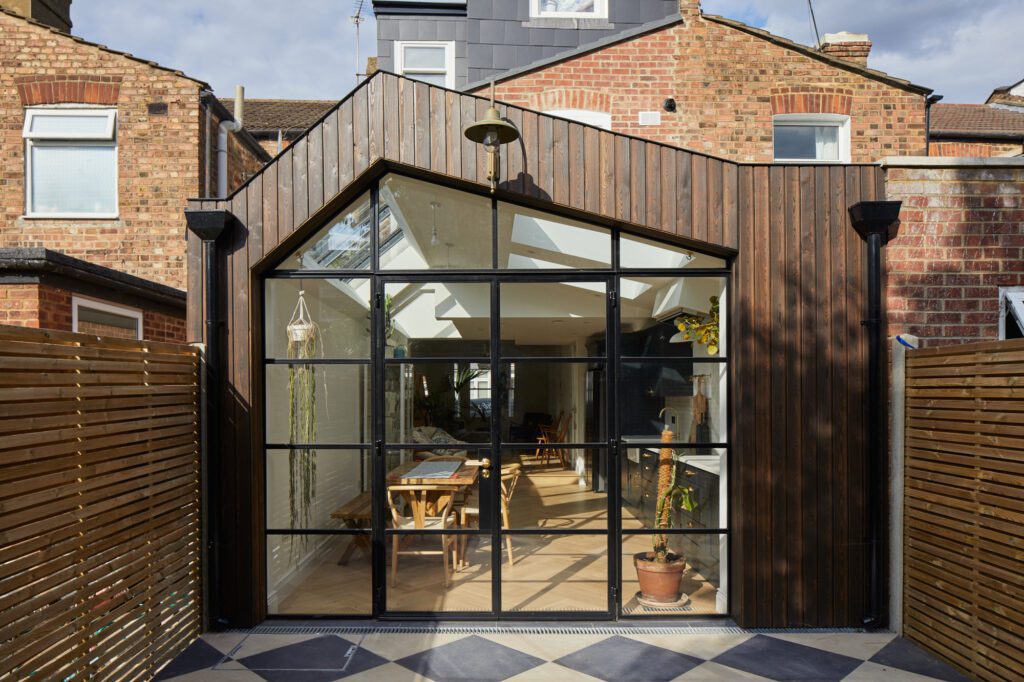
The rear extension is the most popular built type of single-storey extension in London. It extends the back of the house into the garden, typically by 3 to 6 metres, creating additional kitchen, dining, or living space.
For a rear extension in London in 2026, budget £3,000 to £4,500 per m² at mid-range to premium specification. On a typical footprint of 15 to 30 m², that produces a total project cost of £60,000 to £135,000, including fees and VAT.
Within that range, two variables have the greatest impact on the final figure. The first is glazing. A rear extension with full-width bi-fold or sliding doors and one or more rooflights will cost more than one with standard window openings. High-quality aluminium bi-fold doors for a 3 to 4 metre opening typically cost £4,000 to £12,000 depending on the manufacturer and thermal specification, and structural rooflights can add £2,000 to £5,000 each.
The second variable is the kitchen. If the rear extension is designed to house a new kitchen, the fit-out cost sits on top of the shell build. Kitchen costs are addressed separately below, but the combined effect of glazing and kitchen fit-out is the reason two rear extensions of identical size can differ by £30,000 or more in total cost.
Many rear extensions of 3 metres depth or less on detached or semi-detached houses, and 3 metres on terraced houses, fall within permitted development rights and do not require a planning application. Larger Householder Prior Approval schemes allow single-storey rear extensions of up to 6 metres (semi-detached) or 8 metres (detached), subject to a neighbour notification process. Properties in conservation areas or subject to Article 4 directions may have these rights restricted or removed entirely.
Side Return Extension Costs in London
A side return extension infills the narrow passage that runs alongside the rear outrigger on Victorian and Edwardian terraced houses. These passages are typically 0.9 to 1.5 metres wide and are among the most underused spaces on a London terrace.
Infilling the side return and combining it with the existing rear room creates a significantly wider, open-plan kitchen or living space. It is one of the most popular extension types across inner London boroughs such as Islington, Hackney, and Hammersmith & Fulham.
The cost per square metre for a side return extension is higher than for a rear extension, typically £3,500 to £5,000 per m² in London. Total project costs generally fall between £50,000 and £100,000.
The elevated per-square-metre rate reflects the smaller overall footprint: the economies of scale that bring down the unit cost on a larger rear extension are reduced when the total floor area gained is only 8 to 15 m². Foundations, structural openings, drainage diversions, and professional fees represent a larger proportion of a smaller total.
Side return extensions often fall within permitted development, but this should never be assumed in London. Many of the boroughs where this extension type is most common, including Islington and Camden, have Article 4 directions in place across significant parts of their area, requiring a full planning application regardless of the extension’s size.
Kitchen Extension Costs in London
Most single-storey extensions in London are designed, at least in part, to create a new or larger kitchen. The structural shell cost has been covered above, but the kitchen fit-out cost sits on top of this and varies enormously depending on the specification.
It is worth separating these two elements clearly, because many published cost guides either omit the kitchen fit-out entirely or roll it into a single headline figure, leaving homeowners with an unrealistic picture of the total investment.
For the shell build of a kitchen extension, use the rear extension per-square-metre rates above: £3,000 to £4,500 per m² in London.
For the kitchen fit-out itself, expect the following ranges:
| Kitchen Tier | Units, Worktops, and Appliances | Typical Total |
|---|---|---|
| Budget | Stock units, laminate worktops, standard integrated appliances | £8,000 – £15,000 |
| Mid-range | Semi-custom or quality off-the-shelf units, quartz or composite worktops, mid-range appliances | £15,000 – £30,000 |
| Premium | Bespoke handmade units, natural stone or specialist worktops, high-end appliances (e.g. Gaggenau, Miele, Wolf) | £30,000 – £60,000+ |
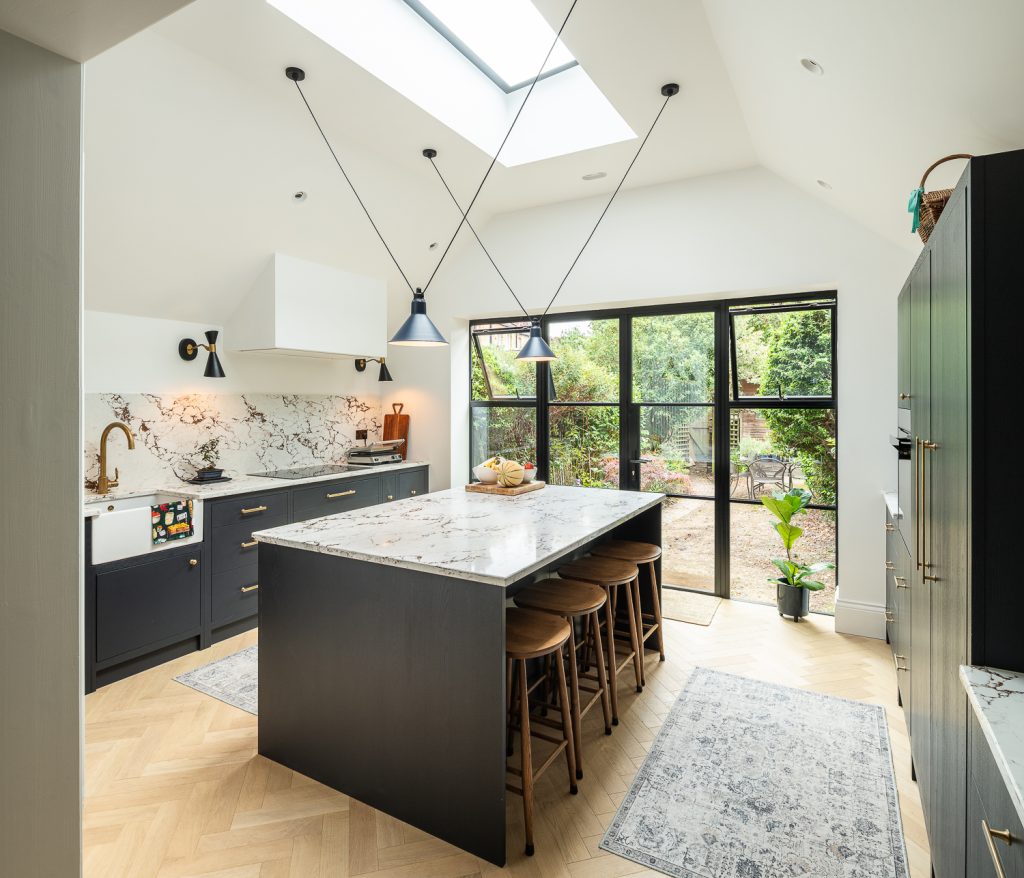
Combining the shell and fit-out, a 20 m² kitchen extension in London at mid-range specification will typically cost £75,000 to £115,000 in total, including professional fees and VAT. At premium specification, that figure can exceed £150,000.
Wraparound Extension Costs
A wraparound extension combines a rear extension with a side return infill, or extends along two sides of the property in an L-shape, to create the largest possible single-storey footprint. It is the premium option for homeowners who want to maximise ground floor space in a single build phase.
In London, wraparound extensions cost £3,200 to £4,800 per m², with total project costs typically falling between £90,000 and £170,000 depending on size, specification, and site complexity.
The higher total cost reflects the larger footprint, which commonly ranges from 25 to 40 m², and the more complex structural connections involved. A wraparound typically requires larger and more numerous steel beams, more extensive foundation works, and a more involved roof design than a simple rear extension.
Wraparound extensions almost always require a full planning application, as their scale and footprint generally exceed permitted development limits.
For homeowners considering a wraparound, the cost premium over a simple rear extension is typically 15 to 25%. The return on that investment is a substantially larger and more flexible ground floor layout, and a single construction programme rather than two-phased projects.
Double Storey Extension Costs
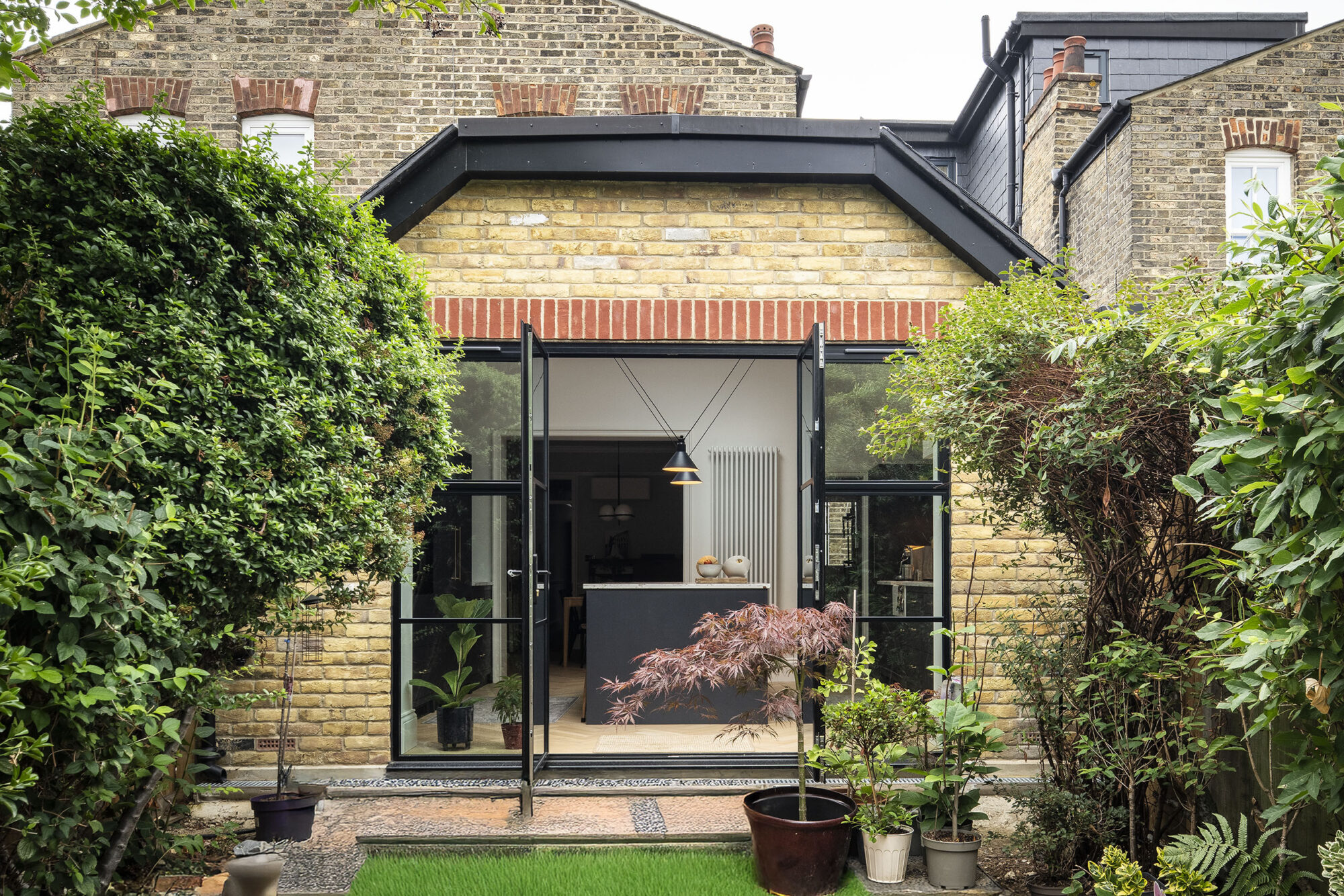
A double-storey extension in London costs between £2,800 and £4,200 per m² in 2026, with total project costs typically ranging from £120,000 to £200,000 or more, depending on size, specification, and site conditions.
The cost per square metre is often lower than for a single-storey extension of equivalent specification. This is because the most expensive elements of any extension, the foundations and the roof, are shared across two floors. You pay for one set of groundworks and one roof structure but gain twice the internal floor area. On a typical 30 m² footprint, a double-storey extension delivers 60 m² of usable space, making it one of the most cost-efficient ways to add significant floor area to a London property.
That said, the total project cost is higher than for a single-storey build because there is simply more of everything: more brickwork, more structural steelwork, more internal fit-out, and more complex services distribution across two levels.
Scaffolding is required for the full duration of the build, adding £5,000 to £15,000 depending on the property’s size and access constraints. Structural engineering costs are also higher, as the design must account for additional load-bearing capacity, and the foundations may need to be deeper or wider to support the increased weight.
Planning considerations are more complex. Two-storey rear extensions can fall within permitted development in limited circumstances: the extension must not exceed 3 metres in depth from the original rear wall, must sit at least 7 metres from the rear boundary, and the ridge and eaves heights must not exceed those of the existing house. Two-storey side or front extensions are never permitted development. In practice, most two-storey extensions in London require a full planning application.
The impact on neighbouring properties carries more weight at the planning stage. Councils assess two-storey extensions against daylight and sunlight rules, specifically the BRE Guide’s 25-degree and 45-degree tests, to determine the effect on habitable room windows in adjacent properties. Overlooking is also scrutinised: any first-floor windows on side elevations must typically be obscure-glazed and non-opening below 1.7 metres from the internal floor level.
Two-storey extensions are far better suited to semi-detached and detached properties in outer boroughs such as Wandsworth, Bromley, Croydon, and Richmond, where plots are larger, rear gardens are deeper, and the relationship to neighbouring properties is less constrained. In these locations, a double-storey extension can transform a three-bedroom house into a five-bedroom family home for a fraction of the cost of trading up in the same postcode.
Average Cost of a House Extension in the UK
The average cost of a house extension in the UK in 2026 ranges from £1,800 to £3,000 per square metre for a fully finished single-storey build, depending on specification, property type, and region. Double-storey extensions typically cost £1,800 to £2,800 per m², reflecting the shared foundation and roof costs across two floors.
These national figures are useful as a baseline, but they can significantly understate the real cost for homeowners in London and the South East.
| Extension Type | UK Average Per m² | London Per m² | London Premium |
|---|---|---|---|
| Rear (single storey) | £1,800 – £3,000 | £3,000 – £4,500 | +40–65% |
| Side return | £2,200 – £3,200 | £3,500 – £5,000 | +50–60% |
| Wraparound | £2,000 – £3,000 | £3,200 – £4,800 | +50–65% |
| Double storey | £1,800 – £2,800 | £2,800 – £4,200 | +40–55% |
The gap is driven by the factors covered earlier in this guide: higher labour rates, constrained urban sites, conservation area and planning complexity, and the logistics costs that are specific to building in a dense city.
National cost guides published by the HomeOwners Alliance and MyJobQuote provide helpful benchmarks for the rest of the country, but London homeowners should treat the London-specific ranges in this guide as their starting point. If you are extending in London, budgeting from a national average figure is one of the most common causes of cost shortfalls mid-project.
Extension Costs by London Borough
Extension costs in London vary meaningfully from borough to borough. The differences are driven by local labour market conditions, the density of conservation areas and listed buildings, the character of the housing stock, site access constraints, and the expectations of both the local property market and the local planning authority.
For the full breakdown of planning rules, material requirements, and what conservation area status means for your project, read our conservation area extension guide.
Camden
Camden is characterised by Victorian and Edwardian terraced housing, with pockets of Georgian stock in areas such as Bloomsbury and Fitzrovia. The borough has one of the highest densities of conservation areas in London, including Dartmouth Park, Belsize Park, Hampstead, and Kentish Town. Article 4 directions are common, removing permitted development rights across large parts of the borough.
Planning applications in Camden frequently require a design and access statement, and the council’s planning team applies detailed scrutiny to materials, roof forms, and the relationship between new and existing elements. Specification expectations from the local property market are high.
Indicative cost premium over outer London: 10–20%. Budget £3,300 to £5,200+ per m² for a mid-range to premium specification extension.
Properties in conservation areas attract an additional planning and materials cost premium – see our guide to conservation area extensions in London for full detail.
Hackney
Hackney has a varied housing stock that mixes Victorian terraces in De Beauvoir Town, Clapton, and London Fields with post-war estates and more recent infill development. Side return extensions are particularly popular on Hackney’s Victorian terraced streets, where the narrow side passage is a characteristic feature.
The borough’s planning department is generally pragmatic, and contractor competition across East London is relatively strong, which can moderate pricing slightly compared to the prime West London boroughs.
Indicative cost range: £3,000 to £4,800 per m².
Islington
Islington has one of the highest conservation area densities of any London borough. Article 4 directions are widespread, and the council’s planning policies impose rigorous design standards on extensions within these areas. Listed buildings are more frequent than the London average, particularly in Canonbury, Barnsbury, and around Upper Street.
The dominant property type is the narrow, mid-terrace Victorian house with limited rear garden depth and no side access. These site constraints increase logistics costs: materials must be carried through the property or craned over, skips must be placed on the street under permit, and build programmes are often longer as a result.
Indicative cost range: £3,400 to £5,200+ per m².
Properties in conservation areas attract an additional planning and materials cost premium – see our guide to conservation area extensions in London for full detail.
Kensington & Chelsea
Kensington & Chelsea is the most expensive borough in London for residential construction. Labour rates are at a premium, specification expectations are the highest in the capital, and conservation area coverage is extensive. The council’s planning and building control team applies exacting standards to extension design, materials, and detailing.
Party wall disputes are more frequent here than elsewhere in London, driven by the combination of attached properties, high property values, and the scale of works often proposed. This can add both cost and programme time.
Indicative cost range: £3,800 to £5,500+ per m². At premium specification, costs can exceed £6,000 per m² on complex sites.
Properties in conservation areas attract an additional planning and materials cost premium – see our guide to conservation area extensions in London for full detail.
Wandsworth
Wandsworth offers a more varied picture than the inner London boroughs above. The housing stock includes larger semi-detached and detached properties, particularly in areas such as Putney, Southfields, and around Wandsworth Common, alongside Victorian terraces in Battersea and Tooting. This variety creates greater scope for double-storey and wraparound extensions.
The council’s planning department is generally responsive, and the broader range of housing types means a wider spread of project budgets.
Indicative cost range: £3,000 to £4,500 per m².
Hammersmith & Fulham
Hammersmith & Fulham straddles the line between inner and outer London pricing. The borough contains a mix of Victorian terraces in Fulham, which generate strong demand for side return and rear extensions, and larger properties in Brook Green, Brackenbury Village, and along the Hammersmith riverside.
The council’s planning department maintains clear design guidance, and determination timescales are broadly in line with the London average.
Indicative cost range: £3,200 to £4,800 per m².
Properties in conservation areas attract an additional planning and materials cost premium – see our guide to conservation area extensions in London for full detail.
Other London Boroughs
Outer London boroughs such as Bromley, Croydon, Richmond, Ealing, and Barnet will generally sit 10 to 20% below the inner London cost ranges quoted in this guide. Labour rates are slightly lower, sites tend to be more accessible, and planning constraints are less intensive in most residential areas. That said, conservation areas and listed buildings exist in every London borough, and any property within a designated area will attract a cost premium regardless of its postcode.
Conservation Areas and Listed Buildings: The Cost Premium
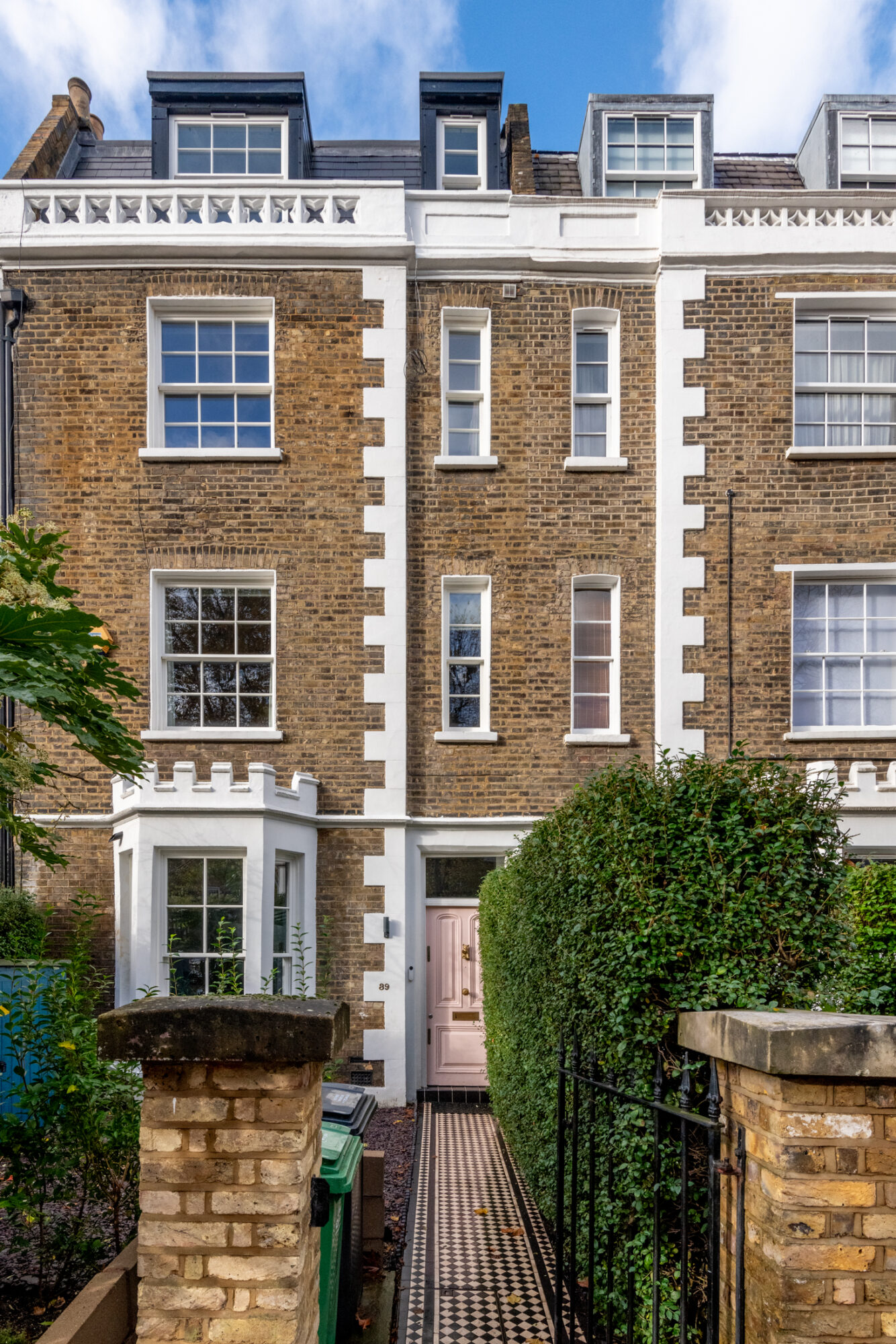
Extending a property in a conservation area or a listed building introduces additional cost layers that do not apply to standard residential extension projects. Conservation area extensions typically incur a premium of 15 to 30% above the standard cost ranges quoted in this guide. Materials must often match the existing building: reclaimed brick, lime mortar, natural slate, and traditional timber windows may be required in place of modern alternatives.
Planning submissions are more detailed, frequently requiring a heritage impact assessment and a design and access statement. Planning determination timescales can also be longer, as conservation officers review applications in addition to the standard planning case officer.
Listed building extensions carry an even higher premium, potentially 25 to 40% or more above standard costs. Listed building consent is required for any works that affect the character of a listed building. Construction costs are higher because the works must be carried out with greater care, often by specialist craftspeople experienced in working with historic buildings.
What Is Included in an Extension Cost Breakdown?
Understanding where your money goes is crucial when controlling an extension budget. The percentage breakdown below reflects a typical mid-range single-storey extension in London.
| Cost Category | % of Total Budget |
|---|---|
| Construction (shell, first fix, and second fix) | 55–60% |
| Professional fees (architect, structural engineer, party wall surveyor) | 12–18% |
| Kitchen or bathroom fit-out | 8–15% |
| Windows, doors, and glazing | 8–12% |
| VAT at 20% | Applied to total |
| Contingency | 10–15% |
| Planning and Building Control fees | 1–2% |
| Insurance and administration | 1–2% |
Below is a modelled cost breakdown for a 25 m² single-storey rear extension in London at mid-range specification. These figures are indicative, based on current industry benchmarks, and should be used as a planning reference rather than a fixed quote.
| Cost Category | Indicative Amount | % of Total |
|---|---|---|
| Preliminaries (site setup, supervision, waste removal) | £6,000 – £9,000 | 6–8% |
| Demolition and strip-out | £2,000 – £4,000 | 2–3% |
| Substructure (foundations, ground beams) | £10,000 – £18,000 | 10–15% |
| Superstructure (walls, steelwork, roof) | £18,000 – £25,000 | 18–22% |
| External glazing (windows, doors, rooflights) | £8,000 – £15,000 | 8–12% |
| First fix (plumbing, electrics, heating) | £6,000 – £10,000 | 6–8% |
| Second fix and finishes (plastering, decoration, flooring) | £8,000 – £12,000 | 8–10% |
| Kitchen units and appliances | £15,000 – £30,000 | 12–20% |
| Professional fees | £12,000 – £18,000 | 12–15% |
| Planning and Building Control fees | £1,500 – £3,000 | 1–2% |
| Contingency (10–15%) | £10,000 – £15,000 | 10–12% |
| Subtotal (excl. VAT) | £96,500 – £159,000 | |
| VAT at 20% | £19,300 – £31,800 | |
| Total (incl. VAT) | £115,800 – £190,800 |
These figures are modelled using current RICS and BCIS benchmarks and reflect London pricing at mid-range specification. Your actual costs will vary depending on borough, site conditions, and specification choices.
Understanding a Builder’s Quote
One of the most common sources of budget confusion is the gap between what a builder’s quote includes and what the homeowner assumes it includes. Two quotes for the same project can differ by 20% or more simply because they define the scope of works differently.
The critical distinction is between a shell-only quote and a fully inclusive quote. A shell-only quote covers the structural build: foundations, walls, roof, windows, doors, basic plumbing and electrics, and plastering. It does not include the kitchen or bathroom fit-out, flooring, decoration, or landscaping.
A provisional sum is an estimated allowance for work that has not yet been fully specified. A prime cost sum is an allowance for materials or fittings that the homeowner will select later, such as tiles, sanitaryware, or light fittings. In both cases, the actual cost may be higher or lower than the sum quoted.
A properly structured builder’s quote should include: a clear scope of works with reference to the architectural drawings and specification; confirmation of the pricing basis, fixed price or cost-plus; a statement of the VAT position; all provisional and prime cost sums itemised separately; a payment schedule tied to project milestones; a retention clause; a confirmed start date and estimated completion date; and evidence of public liability insurance.
For residential extensions, the most commonly used standard contract is the JCT Minor Works Building Contract. The government-endorsed TrustMark scheme is a useful starting point for identifying reputable contractors.
Contingency: How Much Should You Set Aside?
Every extension project should include a contingency allowance. 10 to 15% is appropriate for a well-designed project on a standard property where full surveys have been completed. 15 to 20% is more realistic for older properties, properties in conservation areas, or projects where there are known unknowns. 20% or more should be allowed for listed buildings or projects with significant below-ground risk.
The most common triggers for overspend on London extensions are: unforeseen ground conditions; specification changes during construction; party wall disputes that delay the programme; Building Control requirements that emerge during construction; and weather delays on exposed or partially enclosed sites.
Where to Save, and Where Not to Cut Corners
Smart saves that maintain design quality: aluminium-framed glazing instead of Crittall or minimal-frame steel alternatives; engineered timber flooring in place of solid hardwood; flush-fitting rooflights in place of a full structural glass roof; mid-range kitchen units combined with premium handles and a high-quality worktop; standard radiators with thermostatic valves rather than underfloor heating throughout.
Where not to cut: foundations and structural steelwork should never be under-specified. Waterproofing and insulation must meet or exceed Part L requirements. Glazing quality matters: budget double-glazing units may not meet current thermal performance standards. Professional fees should not be treated as an area for savings. Skipping a structural engineer, omitting a party wall surveyor, or choosing the cheapest architect creates legal exposure, safety risk, and a higher probability of costly errors during construction.
Architect and Professional Fees for Extensions
Professional fees on a London extension typically add 12 to 18% to the construction cost. This covers the architect, structural engineer, and any other specialists required to take the project from concept through to completion on site.

How Much Do Architects Charge for Extensions?
Architect fees for a residential extension in London generally fall between 8 and 15% of the construction cost, with 10 to 12% being the most common range for a full service from initial design through to construction monitoring. On a £120,000 extension, that translates to £12,000 to £18,000 in architect fees. Some practices charge fixed fees rather than a percentage, typically in the range of £5,000 to £15,000.
The fee covers a defined set of services, structured around the RIBA Plan of Work stages 0 to 7. At My/Architect, the integrated service model covers design, planning, and contractor coordination within a single appointment.
Planning application fees for householder extensions in England are set nationally. From 1 April 2026, annual CPI indexation of 3.8% brings the householder application fee to £548. Listed building consent applications remain free of charge, though the professional costs of preparing them are substantial.
For homeowners who want to verify their architect’s credentials, the Architects Registration Board maintains the statutory register of all architects licensed to practise in the UK.
Other Professional Costs
Structural engineer: £1,000 to £3,000. Required on virtually every extension to design foundations, steel beams, and any structural openings between the existing house and the new build.
Party wall surveyor: £800 to £1,500 per adjoining neighbour. If your extension is built on or near a shared boundary, the Party Wall etc. Act 1996 requires you to serve notice on your neighbours. On a mid-terrace property with two adjoining neighbours, party wall costs can reach £3,000 to £4,500.
Quantity surveyor: £1,500 to £3,000. Not required on every project, but valuable on larger or more complex extensions where an independent cost plan and tender analysis help ensure the builder’s quote represents fair value.
Building Control: £500 to £1,500. All extensions require Building Regulations approval, either through the local authority Building Control service or an approved inspector.
Planning consultant: £1,500 to £5,000+. Not needed for straightforward householder applications, but valuable for complex projects in conservation areas or applications involving listed buildings.
How to Estimate Your Extension Cost
Many homeowners search for an extension cost calculator, and there are several available online. But no generic tool can account for the variables that shape a London extension budget: your borough, your site conditions, your specification choices, and the current state of the local contractor market. The seven-step process below provides a structured framework for building a realistic estimate from the ground up.
- Determine your extension size in square metres. Measure the footprint of the space you want to add, or ask your architect to confirm it from the initial sketches. A typical rear extension is 15 to 30 m². A side return adds 8 to 15 m². A wraparound covers 25 to 40 m².
- Select your specification tier. Basic specification sits at £2,800 to £3,200 per m², mid-range at £3,200 to £4,200, and premium at £4,200 to £5,500+.
- Adjust for your borough. Use the borough-level guidance in the section above to determine where your area sits within the London cost spectrum.
- Multiply size by your adjusted per-square-metre rate. This gives you the base construction cost. For example, a 25 m² rear extension in Islington at mid-range specification: 25 × £4,000 = £100,000.
- Add kitchen or bathroom fit-out costs if applicable. Add £15,000 to £30,000 for mid-range kitchen units, worktops, and appliances, or £30,000 to £60,000+ at the premium level.
- Add professional fees at 15 to 20% of the construction cost. This covers your architect, structural engineer, party wall surveyor, and Building Control.
- Add contingency at 10 to 15% and VAT at 20%. For a standard property with full surveys completed, 10% is reasonable. For older properties, conservation area sites, or projects with unresolved unknowns, budget 15% or more.
Worked Example: 25 m² Rear Extension in Islington
| Item | Amount |
|---|---|
| Construction (25 m² × £4,000/m²) | £100,000 |
| Kitchen fit-out (mid-range) | £22,500 |
| Professional fees (17.5%) | £17,500 |
| Planning application fee | £548 |
| Building Control fee | £1,000 |
| Party wall (two adjoining neighbours) | £3,500 |
| Contingency (10%) | £14,500 |
| Subtotal (excl. VAT) | £159,548 |
| VAT at 20% | £31,910 |
| Total (incl. VAT) | £191,458 |
This is an indicative estimate, not a quote. Every project is different, and site-specific factors such as ground conditions, access constraints, and specification choices will move the figure in either direction.
House Extension Cost FAQs
How much does a 4m x 5m extension cost in London?
A 20 m² single-storey extension in London typically costs between £60,000 and £100,000 for the construction and fit-out, depending on specification. Add professional fees at 15 to 20% and VAT at 20% to reach a realistic total budget. In high-cost boroughs such as Kensington & Chelsea, expect the upper end of this range or above.
Is it cheaper to extend or move house in London?
In most cases, extending is significantly cheaper. The Stamp Duty alone on purchasing a larger property in London can exceed £25,000, before estate agent fees, solicitor costs, and removal expenses. A well-specified extension often adds equivalent space at a fraction of the total moving cost, and increases the value of your existing home rather than generating sunk transaction costs.
Do I need planning permission for a house extension in London?
Many single-storey rear extensions fall within permitted development rights and do not require a formal planning application. However, properties in conservation areas or subject to Article 4 directions, which are common across inner London boroughs, may have restricted or removed permitted development rights. Always confirm with your architect or local planning authority before starting work.
How long does a house extension take to build?
A typical single-storey extension in London takes 12 to 16 weeks to build on site. Two-storey extensions typically take 16 to 24 weeks. Allow an additional 3 to 6 months before construction begins for design, planning, and Building Regulations approval. For projects in conservation areas or involving listed buildings, add further time for the more detailed planning and consent processes.
What is the cheapest type of house extension?
A side return extension is often the most cost-effective way to add usable living space to a Victorian or Edwardian terrace, as it makes use of a passage that would otherwise sit empty. Total costs start from around £50,000 in London. The cost per square metre is typically higher than for a larger rear extension, however, due to the smaller footprint and reduced economies of scale.
How much does a house extension add to property value?
A well-designed extension in London can add 10 to 20% to a property’s value, with prime area projects occasionally achieving up to 30%. The return depends on the quality of design and construction, the local property market, and the type of space added. Kitchen-diners and additional bedrooms with en-suite bathrooms tend to deliver the strongest value uplift. Research from Knight Frank and the Nationwide House Price Index consistently supports these ranges for London properties.
Can I live in my house during an extension?
In most cases, yes. Single-storey rear and side return extensions can usually be built while you remain in the property. There will be noise, dust, and disruption, particularly during the demolition and structural phases, but the house remains habitable throughout. For larger projects involving significant internal remodelling or structural work to the existing house, temporary relocation may be more practical.
Next Steps: Get a Project-Specific Estimate
The cost ranges in this guide give you a credible framework for planning your extension budget. But every London property is different, and the final figure for your project will depend on your site, your borough, your specification choices, and the current contractor market.
The most reliable way to move from a planning budget to a real number is to speak to an architect who works regularly on residential extensions in London.
My/Architect’s team has delivered over 400 residential projects across the capital, from rear extensions in Wandsworth to complex conservation area schemes in Islington and Camden. We understand the borough-level cost variations, the planning constraints, and the practical realities of building in London’s residential streets.

Book a free consultation to discuss your project. We will review your property, talk through your brief, and provide an initial cost estimate tailored to your specific situation.